Our Foundation
Democracy has always been a greater part of the fundamentals on which the state of Qatar was founded by the late Sheikh Mohammed Bin Thani, who was the first Ruler of the State of Qatar. He remains one of the eminent leaders.
Sheikh Mohammed Bin Thani was born around 1776 in Fuweirat, Northeastern Qatar, where he was raised and eventually succeeded his father as Chief of his tribe in 1839. In 1848, he moved to Doha (Ai Bida) and became the chief, his dominance extended to all parts of Qatar.
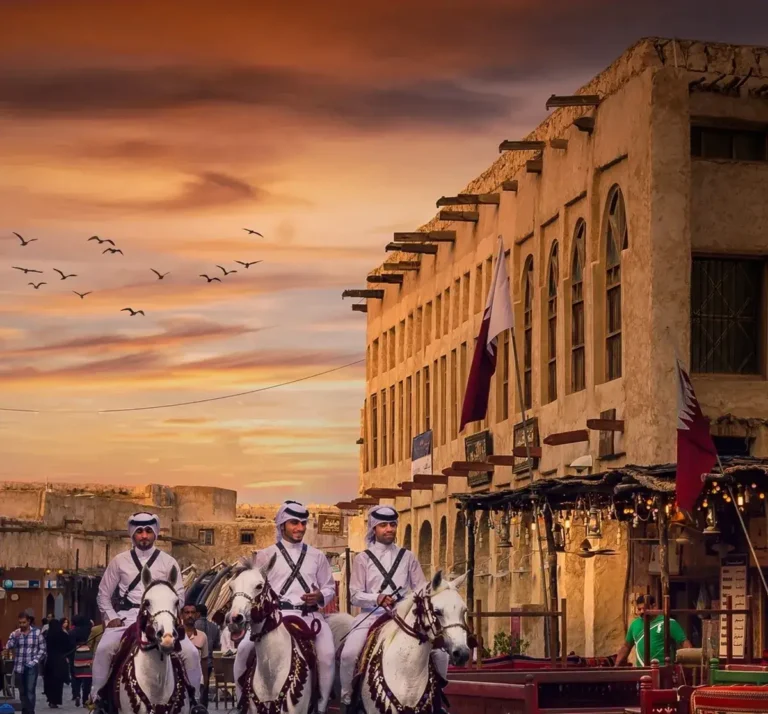
In 1851, Sheikh Mohammed became Ruler of Qatar. Through his bravery and determination, he achieved a milestone that shaped Qatar ´s future forever. He united all Qatar´s leading tribes under the Purple-Red Banner, which later became the national flag. He strengthened the country´s sovereignty and forged political ties with major global powers.
His leadership was applauded by his ability to unite all Qatari tribes, where all tribes were treated equally and provided with inherent rights. He was known for his wisdom, far sightedness, and love for literature and poetry.

Our Core
Qatar’s democracy is not only rooted in its wise leadership but also strengthened by principles of justice, dignity, and inclusion. It encompasses a broad range of moral, ethical, social, and legal guidelines that uphold the protection of life, the family, individual well-being, and communal prosperity.
Central to this vision is respect for sound local customs and practises, ensuring that governance reflects the values of its people while fostering fairness, accountability, and shared progress.


Voices that Shape Democracy
Democracy thrives when people’s voices are heard. At QCPD, we amplify participation and inclusion, ensuring leadership is grounded in consent, dignity, and shared responsibility.
Our Foundation
The Qatar Center for Peace and Democracy was founded with the mission to reclaim for the people what was once rightfully theirs. Our call for Democracy is short from new on our agenda, Democracy has always been a greater part of the fundamentals on which the state of Qatar was founded by the late Sheikh Mohammed Bin Thani, who was the first Ruler of the State of Qatar. He remains one of the eminent leaders.
Sheikh Mohammed Bin Thani was born around 1776 in Fuweirat, Northeastern Qatar, where he was raised and eventually succeeded his father as Chief of his tribe in 1839. In 1848, he moved to Doha (Ai Bida) and became the chief, his dominance extended to all parts of Qatar.
In 1851, Sheikh Mohammed became Ruler of Qatar. Through his bravery and determination, he achieved a milestone that shaped Qatar ´s future forever. He united all Qatar´s leading tribes under the Purple-Red Banner, which later became the national flag. He strengthened the country´s sovereignty and forged political ties with major global powers.
His leadership was applauded by his ability to unite all Qatari tribes, where all tribes were treated equally and provided with inherent rights. He was known for his wisdom, far sightedness, and love for literature and poetry.
Our Core
Qatar’s Democracy is not only rooted in it’s wise leadership but also adheres to the Sharia Law. The Sharia Law is a system of Islamic law derived from the Quran (The Holy Book of Islam), the Hadith (the saying and action of the Prophet Muhammad), and centuries of interpretation by Islamic scholars. It encompasses a broad range of moral, ethical, social, and legal guidelines that govern many aspects of a Muslim´s life, including religious practices, family relations, personal conduct and legal matters.
The five major goals of the Sharia laws are:
Protection of sound religious practices
Life
Sanity
The Family
Personal and communal wealth.
The acknowledgement of sound local customs throughout the world is one of the five basic maxims of the Sharia according to all Islamic schools of law.
Power in Faith
In Islam, power belongs to the people. Power in accordance with Islam will be attained by the content of the people. In a society where the consent of the tribal chief is secured and the general populace is in accordance, this is considered as a contextual form of democracy. The active participation and engagement of the people is essential this represents a form of practiced democracy. The Qatar Center for Peace and Democracy seeks to foster these forms of people participation and engagement. It further promotes that the power of the chief is only attained by the consent of the people and not by legacy passed down from predecessors.